Showing posts with label International film business. Show all posts

Thursday, June 15, 2023

Cannes 2023: A New Financier on the Circuit

The film financier out of Atlanta, Georgia, Jon Gosier of FilmHedge, was very visible this year in Cannes. Aside from the banner on the Croisette advertising his office, his company sponsored the Producer’s Club for the second year and it graced the cover of the Cannes Market Guide. Who is this newly visible player? A discussion with Gosier follows.
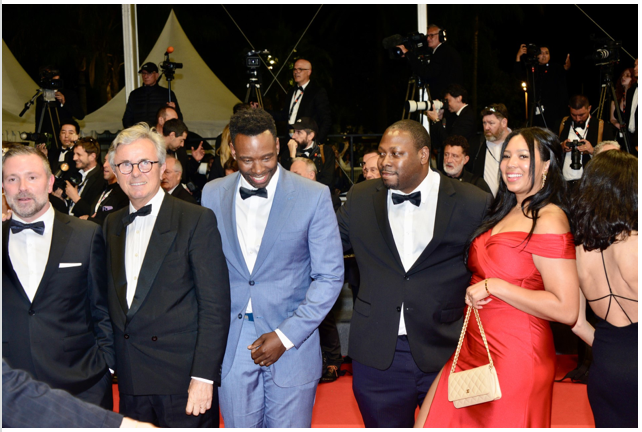
(L to R) Mickey Vetter (FilmHedge), Bruno Chaetlin (FilmFestivals.com), Erik Gordon (FilmHedge), Jon Gosier (FilmHedge), Ashley H. (Morgan Stanley)

His company, FilmHedge, along with his company Southbox Entertainment, announced a $25M partnership with Riveting Entertainment in which Gosier will be both investor and strategic advisor. Production on their first feature-length film will begin in Georgia this year.

FilmHedge also announced that Archstone Entertainment has secured worldwide sales rights to a film they financed called The December Cross.

This marks the second year that FilmHedge has sponsored the Cannes Film Festival Producers’ Club. They sponsor it, not because they are looking for producers. Producers themselves are always looking for money. They sponsor it so that they can educate the producers on how best to get that money. Things like equity vs. debt loans and how to get FilmHedge’s debt loans. The Film Financing Forum is the only program I know of that explains the business of film financing to filmmakers and that is the reason for Jon’s presence at the Producers’ Club.
Last year the Film Financing Forum focused on female filmmakers. Two of the largest investors in his company are women in venture capital. This year the focus has broadened but includes filmmakers from Africa and the African Diaspora.

Jon Gosier, the Founder and CEO of FilmHedge, is an entrepreneur, software developer, investor, and philanthropist. He graduated SCAD, The Savannah College of Art and Design and began his career in music at a recording studio. He always had an interest in movies, but at that time in Atlanta, there was no movie industry. When a “then-unknown guy” brought his movie to the studio, Gosier asked to be put on his session because of this interest.

The unknown guy was Tyler Perry doing some audio for the movie Diary of A Mad Black Woman. About two years later, Tyler Perry Studios reached out and asked him to join them as Music/Audio Supervisor. That made him one of the first employees to work at the illustrious Tyler Perry Studios, where he learned the ins and outs of closing media deals. Now Gosier is using his knowledge to help filmmakers finance feature films, TV series, and documentaries.

Fast forward ten years. After working for Tyler for a while, he quit to do his own thing as an entrepreneur and he built several technology companies across multiple continents, became an angel investor and dabbled as a venture capitalist.

Gosier founded Audigent, which is the leading data activation, curation, and identity platform used by major music publishers, including Warner Music, which now owns a substantial stake of the company. Jon, a native of Georgia, is also the founder of Southbox Entertainment (2018), a film and TV production and co-financing company based in Atlanta.

He was named as one of Ten African Tech Voices to Follow on Twitter by CNN and one of the 25 most influential African-Americans in Technology by Business Insider. He was awarded a TED Fellowship in 2009 and later named a TED Senior Fellow. He was born May 20, 1981 (age 42 years) in Reston, Virginia, United States and has also founded Appfrica, HiveColab, and Abayima.

Now Gosier is using his knowledge to help aspiring filmmakers find their footing by securing financing for their feature films, TV shows or documentaries.

Sydney: I liked how your CFO/COO, Josh Harris, explained it: “Technology and streaming has rewired entertainment consumption forever, pushing Hollywood to produce more content at greater speed. FilmHedge is built at the intersection of technology and entertainment and is uniquely positioned to influence the evolution of the film industry by creating efficiencies while deploying much needed private capital into a diverse marketplace.”

Josh Harris, with 20-plus years in institutional finance, worked as a lender on over $1 billion of film transactions and in leadership for top banks like RBC and Bank of Hawaii, supporting their corporate and commercial banking platforms. Most recently, he grew the entertainment financing division at City National Bank, an RBC company, helping to increase returns and expand the entertainment portfolio of businesses. Harris is steeped in regulatory know-how. His training and experience in financial services gives him the ability to forecast trends and anticipate market dynamics. His involvement in the entertainment financing vertical and working closely with studios, film, and television has resulted in Harris building a vast influential network at the nexus of Hollywood and Wall Street.

“Josh is an instrumental part of our executive team as a board member and co-founder, helping us secure our debt deal earlier this year and he has the creativity to improve how we deliver financial products to filmmakers. Josh’s acumen and experience in the C-suite will be vital to the growth of FilmHedge, as we continue to see a greater usage rate on our platform,” said Gosier.

Headquarted in Atlanta, Georgia, FilmHedge is a film and TV finance company that leverages proprietary technology to improve the lending process for filmmakers. FilmHedge is an alternative lender providing short-term debt financing up to $10 million dollars per film or TV series to qualified productions. The technology that FilmHedge has built upon is customized for the unique needs of the film and TV finance industry. Through the innovative application of this technology, FilmHedge can approve lending in a matter of days whereas legacy bank lenders can take weeks or even months. Because FilmHedge relies on technology for the underwriting process, another advantage is that there is no bias in the financing process.

Can you explain to me what non-equity means?

It means debt financing. We don’t own the film or have a share (equity) in the film. We are loaning money to the film company to make the film.

Could you explain to me the differences between venture capital, private equity and hedge funds?

Venture capitalists are only privately held companies using other people’s money to drive up the paper value of other privately owned companies. They can remain privately owned up to 10 years or more before going public. That is a long time to wait for a return on the investment. They typically start early with start-up companies which then go public or are flipped to other owners.

Private equity firms invest a mix of private and public traded companies. They have shorter return times but also less return on the investment, but they have more deals than VC companies.

Hedge funds are a mix of both of the above. We invest in private and public companies and have both long and short positions.

How do you determine what films to make loans to?

To secure lending from FilmHedge, the production must satisfy our key criteria. First, the borrowers must have sufficient collateral for their production. The film must also have a completion bond, a type of insurance that guarantees a film will be completed or the financial backers will be made whole. FilmHedge considers distribution agreements (with payment clauses known as minimum guarantees), tax credits, and pre-sales as collateral.

FilmHedge earns a net average of 11.28%, which is believed to be above the industry average. Gosier believes transparency is critical to the industry, which is why his company publicly publishes an annual report detailing returns. In 2021, FilmHedge directed $101 million into 10 feature films which generated $113 million within 12 months.

FilmHedge’s technology monitors for production redflags that can result in severe financial problems like going over-budget, misappropriation of funds, and fraud. The software FilmHedge employs monitors in real-time producer spending and transactions via an easy-to-use dashboard that allows investors to see things like allocation of monies, interest earned, and more. You can see an example here.

With increased scrutiny and regulatory oversight of traditional banks brought on by the recent failure of high-profile banks, it’s become more difficult for filmmakers to access capital. This is a gap FilmHedge seeks to fill and the company has already seen increased demand in the past few months.

How can you guarantee such an ROI?

In short, it goes back to the criteria we require for FilmHedge to fund a production. We only fund deals that are bonded and where there’s essentially already a buyer or other financial stakeholders in place. The agreements between the producer and these stakeholders serve as collateral for us.

What about the recent bank failures? How are you affected?

When we began in 2020, COVID broke out. Now there are bank failures. FilmHedge provides private credit. We lend funding to the project, not the filmmaker. Private credit is attractive for investors, and film financing offers a reliable, relatively quick return akin to other asset classes like real estate, trade finance, or factoring.

Also consider that in turbulent economic times, three things thrive: guns, liquor, and entertainment. As a critical piece of the entertainment puzzle, FilmHedge stands to benefit in times like these when compared to traditional investment paths.

OK, now for the hard questions:

Can you explain the systemic exclusion of Blacks in film financing?

The perception that financing is tilted against a particular group is not that easy. The reality is that a lot of filmmakers simply do not understand how the industry works. And the financing part can be daunting for creatives who invest so much of their energy on developing scripts. Filmmakers have to learn how the business side of the system works. The system, in large part, is not broken. Many filmmakers run into a wall and they think it’s because of x, but it is not always the case. And with FilmHedge in particular, we have improved the system to virtually eliminate any discrimination when it comes to who gets funding and who does not. Our system approves deals exclusively based on quantitative attributes, either there’s collateral in place or there isn’t. That’s as objective and equitable as it gets. It is looking strictly at whether or not the production has met our criteria for funding. I spend a lot of time and do a lot of mentoring with emerging filmmakers educating on the basics of film finance. Once you understand how the system works, you can work within it.

Well you can say that, but I know plenty of women who are well qualified who cannot raise money because the Hollywood old boy’s network does exclude them. If there are more projects looking for money than there is money, choices get made ln who gets that money.

I am not saying the industry is free of blame. The entertainment industry faces the same systemic issues other industries face no doubt. That is why it’s important to educate marginalized groups on how to work the system, and in the case of FilmHedge, how to access funding. I can tell you that Georgia is a welcoming home for mainstream filmmakers, as well as marginalized groups. Our open minds and innovative spirit is part of what makes Georgia the top destination for production, outpacing even Hollywood.

Why did FilmHedge establish roots in Atlanta?

During the 2021 fiscal year, the film and television industry set records with $4 billion in direct spending on productions in the state of Georgia. This industry spending was the result of 366 productions filmed in the state — represented by 21 feature films, 45 independent films, 222 television and episodic productions, 57 commercials, and 21 music videos.

Georgia has led the industry in production-friendly policy that has brought blue chip talent and spending to the state. These policies also bring investment, this transaction being a great example.

I also grew up here.

Perks of filming in Georgia:

In Georgia, entertainment tax credits are coveted by TV and Film producers. The State’s film, television, and digital entertainment tax credit of 30% offers significant cost savings for those producing feature films, television series, music videos and commercials, as well as interactive games and animation.

Georgia Film and TV Tax Credit Jumps to a Record $1.2 Billion

Through the Entertainment Industry Investment Act, Georgia provides a 20% tax credit for companies that spend $500,000 or more on production and post-production in-state, either in a single production or across multiple projects. The state grants these productions an additional 10 percent tax credit if the finished project includes a promotional logo in the end credits.

How is Georgia’s election-fraud, anti-abortion and pro-gun stand affecting funds and filming there? I know I myself am guilty of condemning a political stance, but if there is still money to be gotten, I will go after it and I imagine filmmakers concur.

Well so far the rhetoric has not resulted in any policy changes. But politicians need to calculate the risk they are taking with their words.

Yes they should look both ways before crossing the line. You know how they use code words about Hollywood…Meanwhile, it’s business as usual, or as unusual, because it is an unusual business.

Thank you for your time.

You are welcome. Just to summarize:

FilmHedge financing is available to fill gaps in Pre-Production, Production, Post-Production, Re-shoots, or Finishing: FilmHedge provides private credit financing to Film and TV producers up to $10 million per production. We offer short term financing to borrowers working in Film, TV, and Media. Forms of collateral for lending include corporate media agreements like distribution, minimum guarantees, pre-sales, and federal or state tax credits etc.

Upon approval, in 24 to 72 hours applicants can receive the capital needed to complete their project. Types of funding does FilmHedge offer to borrowers:

-Gap Loans

-Bridge Loans

-Finishing Funds

-Liquidity Financing (i.e. Line of Credit)

Term Loans: Up to $10M*

Lines of Credit: Up to $25M*

Typically film projects with total budgets between $1 million and $50 million or TV projects with budgets of at least $500 thousand per episode. Additionally, we primarily finance productions that have, or intend to get, completion bonds.

No development funds. No full budgets (100%)

What’s Happening in Georgia? The Atlanta Film Industry in 2021

Friday, August 19, 2022

Toronto International Film Festival Announces 2022 TIFF Tribute Award for Performance


Toronto International Film Festival Announces 2022 TIFF Tribute Award for Performance

The cast of Michael Grandage’s My Policeman — Harry Styles, Emma Corrin, Gina McKee, Linus Roache, David Dawson, and Rupert Everett — are the first-ever film ensemble to receive this honour

Cameron Bailey, CEO of TIFF, has announced that the ensemble cast of My Policeman — Harry Styles, Emma Corrin, Gina McKee, Linus Roache, David Dawson, and Rupert Everett — will be honoured with the TIFF Tribute Award for Performance.

Now in its fourth year, the TIFF Tribute Awards presented by BVLGARI will return to an in-person gala fundraiser during the 47th edition of the Toronto International Film Festival on Sunday, September 11, at Fairmont Royal York Hotel. As previously announced, My Policeman by director Michael Grandage will have its World Premiere at this year’s Festival.

The TIFF Tribute Award for Performance is presented by Polestar.

“When your film shifts through time and across fluid boundaries of love and desire, you need a cast that can embody those nuances in every gesture,” said Bailey. “Harry Styles, Emma Corrin, and David Dawson deliver beautiful, mirrored performances with Linus Roache, Gina McKee, and Rupert Everett. We’re thrilled to honour the ensemble cast of My Policeman with the TIFF Tribute Award for Performance.”

Adapted for the screen by Oscar-nominated screenwriter Ron Nyswaner from Bethan Roberts’ award-winning novel of the same name, Prime Video’s My Policeman follows three young people — policeman Tom (Styles), teacher Marion (Corrin), and museum curator Patrick (Dawson) — as they embark on an emotional journey in 1950s Britain. Flashing forward to the 1990s, Tom (Roache), Marion (McKee), and Patrick (Everett) are still reeling with longing and regret, but now they have one last chance to repair the damage of the past. Grandage carves a visually transporting, heart-stopping portrait of three people caught up in the shifting tides of history, liberty, and forgiveness.

For the first time ever, the TIFF Tribute Award for Performance will be celebrating an ensemble cast in the now gender-neutral acting category. This is the first of two performance awards to be announced. Past recipients honoured in the prestigious acting category were Jessica Chastain and Benedict Cumberbatch in 2021; Kate Winslet and Sir Anthony Hopkins in 2020; and Meryl Streep and Joaquin Phoenix in 2019.

The TIFF Tribute Awards have served as an awards-season bellwether, with past honourees Jessica Chastain, Roger Deakins, Sir Anthony Hopkins, Joaquin Phoenix, Taika Waititi, and Chloé Zhao going on to win awards on the international stage. The TIFF Tribute Awards honour the film industry’s outstanding contributors and their achievements, recognizing leading industry members, acting talent, directorial expertise, new talent, and a below-the-line artist and creator. The Awards event also serves as TIFF’s largest annual fundraiser to support TIFF’s Every Story fund, which promotes diversity, equity, inclusion, and belonging in film and TIFF’s core mission to transform the way people see the world through film. More information on the 2022 TIFF Tribute Awards event and this year’s honourees will follow in the coming weeks.

My Policeman ensemble biographies

Harry Styles

Harry Styles is an international singer, songwriter, and actor. Styles made his acting debut in Christopher Nolan’s 2017 acclaimed drama Dunkirk and can next be seen in Olivia Wilde’s upcoming film Don’t Worry Darling. My Policeman marks his first-ever starring role.

Emma Corrin

Actor Emma Corrin is best known for the role of Lady Diana Spencer in Season 4 of the Netflix worldwide, award-winning hit series The Crown. The role earned Corrin a Golden Globe and Critics Choice award for Best Actress, as well a SAG and Emmy nomination in the same category. Corrin will reunite with director Michael Grandage this year to star in Orlando, a play penned by Neil Bartlett from the Virginia Woolf novel. Corrin will play the titular role in the feminist classic, which spans nearly 400 centuries and follows a poet who explores gender expression and meets various key figures of English literary history. They have been selected by The Hollywood Reporter as one of their “Next Gen” breakout actors and named as one of Screen International’s “Stars of Tomorrow” in 2020. Up next for Emma is their lead role in the Netflix and 3000 Pictures new film adaptation of Lady Chatterley’s Lover, based on the classic 1928 novel by D.H. Lawrence. Emma is currently filming the lead role in FX’s limited series Retreat. Emma will play Darby Hart, the amateur sleuth at the centre of a murder mystery set at a secluded retreat, joined by further cast including Harris Dickinson and Alice Braga.

David Dawson

David Dawson recently starred in the espionage thriller All the Old Knives for Amazon Studios, starring alongside Jonathan Pryce, Laurence Fishburne, and Chris Pine. Dawson has a wide and varied television career and is also a revered stage actor, best known for his role as King Alfred in The Last Kingdom. On stage, Dawson received a Laurence Olivier Award nomination for playing Smike in the 2007 production of The Life and Adventures of Nicholas Nickleby. Other notable performances have been in The Entertainer (Old Vic); Comedians (Lyric Hammersmith); Posh (Royal Court); Luise Miller (Donmar Warehouse); The Dazzle (Found 111); The Duchess of Malfi (Sam Wanamaker Playhouse); Brian Friel’s Aristocrats (Donmar Warehouse); The Vortex (Rose Theatre); Romeo & Juliet (RSC); The Long, The Short & The Tall (Sheffield Crucible)’ Richard II and, most recently, Fairview (Young Vic.)

Gina McKee

Gina McKee has enjoyed a varied acting career both on stage and on screen. Some of her many film appearances include featured roles in Joe Wright’s Atonement, Michael Winterbottom’s Wonderland, and Roger Michell’s Notting Hill. In Paul Thomas Anderson’s romantic drama Phantom Thread, McKee played the role of Countess Henrietta. She also starred alongside Tom Hollander and Peter Capaldi in Armando Iannucci’s In the Loop. As well as film, McKee has made many notable TV appearances, including most recently as Commander Anne Sampson in the hit BBC TV series Bodyguard. Other TV credits include her role in Hebburn (which won an RTS award), The Borgias, Line of Duty, The Street, The Lost Prince, The Forsyte Saga, Brass Eye, and Our Friends in The North, which earned McKee the coveted Best Actress BAFTA Award. Alongside McKee’s screen career, she is also an acclaimed stage actress with productions including Faith Healer, the Olivier Award–nominated King Lear, and Old Times, all at the Donmar Warehouse. Other productions include: The Mother, Di and Viv and Rose; London’s West End’s Richard III, Ivanov, The Lover and the Collection; as well as Aristocrats for the National Theatre.

Rupert Everett

Rupert Everett first appeared on stage in 1981 as Guy Bennett in the West End production of Julian Mitchell’s play Another Country, a role which he repeated in the 1984 film version and saw him nominated for a BAFTA as Best Newcomer. Subsequent nominations include a BAFTA and Golden Globe for My Best Friend’s Wedding.

Linus Roache

Linus Roache first gained worldwide recognition in Antonia Bird’s critically acclaimed film Priest. Since then, he has appeared in many films, including Iain Softley’s Wings of a Dove, Christopher Nolan’s Batman Begins, Mira Nair’s The Namesake, and John Furse’s Blind Flight, for which he received a Best Actor nomination from the Scottish BAFTAs. He also played the lead role in Pandaemonium, directed by Julien Temple, for which he won the Best Actor award at the Evening Standard Film Awards. He has starred in The Chronicles of Riddick, Hart’s War, and Jaume Collet-Serra’s Non-Stop opposite Liam Neeson. Recently, Linus has starred in Panos Cosmatos’ visionary film Mandy, as well as Hochelaga, Land of Souls, directed by François Girard. In 2022, Linus shot a film called The Dresden Sun, directed by Michael Ryan, and The Apology, directed by Alison Star Locke. He also shot a new Showtime series called Fellow Travellers written and directed by Ron Nyswaner. Linus starred in Liberté: A Call to Spy, directed by Lydia Dean Pilcher, and Alex Gansa’s hit series Homeland for the final two seasons. Other recent credits include the BBC miniseries Summer of Rockets, directed by Stephen Poliakoff, and three seasons as the power-hungry King Ecbert in Michael Hirst’s acclaimed series Vikings. Linus received a Golden Globe nomination for his portrayal of Robert Kennedy in the F/X television film RFK, directed by Robert Dornhelm, and co-starred in HBO’s award-winning The Gathering Storm, for which he won the Satellite Award for best actor in a supporting role. Linus played series regular Executive A.D.A. Michael Cutter in NBC’s Law & Order. He also played a lead role in Julian Fellowes’ miniseries Titanic. His extensive theatrical experience includes seasons with the RSC, the Royal National Theatre, the Royal Court, London’s West End, as well as Richard II and Coriolanus, in which he played opposite Ralph Fiennes at London’s Almeida Theatre and the Brooklyn Academy of Music, directed by Jonathan Kent.

#TIFF22 #TIFFTribute

About TIFF:

TIFF is a not-for-profit cultural organization whose mission is to transform the way people see the world through film. An international leader in film culture, TIFF projects include the annual Toronto International Film Festival in September; TIFF Bell Lightbox, which features five cinemas, major exhibitions, and learning and entertainment facilities; and innovative national distribution program Film Circuit. The organization generates an annual economic impact of $200 million CAD. TIFF Bell Lightbox is generously supported by contributors including Founding Sponsor Bell, the Province of Ontario, the Government of Canada, the City of Toronto, the Reitman family (Ivan Reitman, Agi Mandel, and Susan Michaels), The Daniels Corporation, and RBC. For more information, visit tiff.net.

TIFF is generously supported by Lead Sponsor Bell, Major Sponsors RBC, Visa and BVLGARI, and Major Supporters the Government of Canada, the Government of Ontario, Telefilm Canada, and the City of Toronto.

TIFF Industry programming is generously supported by Telefilm Canada and Ontario Creates. Every Story is generously supported by fund Founding Partner, NBCUniversal.


Thursday, August 11, 2022

Cannes 2022 ‘Triangle of Sadness’ Directed by Ruben Östlund


‘Triangle of Sadness’ Directed by Ruben Östlund;Ruben Östlund, Cannes Competition, Palme d’Or Winner

IMDb synopsis of this film: A cruise for the super-rich sinks thus leaving survivors, including a fashion model celebrity couple, trapped on an island.

I could ask a few of my friends about their involvement in its production, e.g., Jim Stark, Micah Green, Philippe Bober, Lizzie Francke, Mike Goodridge…I wonder what they would tell me. Or I could guess…which is what I am doing here as a subject of this blog.

Philippe Bober: Coproduction Office is the international sales agent for the film. But the company is also, as the name suggests, a coproducer and Philippe usually takes a strong part in the development of the project as well as representing it for licensing to territories. In this case (I have to repeat that have not seen the film, but based upon what I have only heard said), I would guess that he did not do much with the development because when he does, the project is in no way formulaic; I have heard this film has traces of Ostland’s previous film, The Square, which then makes it more prosaic. Bober’s hand in film always makes the film unique.

And Philippe usually works with younger budding talent or else hardcore art house filmmakers. However, as international sales agent, perhaps some presales by him to territories helped finance the film. I am unsure that was necessary because the director Ruben Ostlund is so well known and accoladed already that I would think the money might come from other more well established sources. You can see the companies involved and get an idea of funding.

That’s where I would guess Micah Greene would enter the picture. At 30WESThe is not only producing and is best friends with the US distributor, Neon, one of the top U.S. films distributors today, but he comes from the most prestigious CAA where he was in charge of international financing for their films. He was and is still on top and deserves every good thing that comes his way. A mensch. Lizzie Francke is a true producer, has done horror and comes from the roots of arthouse films from U.K. She is now Editor-at-Large at the BFI Film Fund now. There certainly is a need for such a UK partner. Is there a need for more? Mike Goodridge, founder of the brand new production company Good Chaos, is also there. Aside from producing, Mike has worn many hats, beginning as a journalist and heading up the L.A. office at Screen International, heading up Protagonist a top U.K. international sales agency as well as a production company, heading up Beijing (?) Film Festival, all around professional and all around good guy.

Olivier Père, former head along with (now Tribeca’s Frederic Boyer) looks like he is involved in every current production these days… Check out his credits in IMDb:

La grande magie (co-producer) (post-production)

2022Blind Willow, Sleeping Woman (producer)

2022Pacifiction (co-producer)

2022More Than Ever (co-producer)

2022Triangle of Sadness (co-producer)

2022Brother and Sister (co-producer)

2022Corsage (co-producer)

2022One Fine Morning (co-producer)

2022Les Harkis (co-producer)

And last but not least, Jim Stark, another with an eye, like Philippe Bober, for cutting edge talent and stories, has made 17 films as exec producer, producer, associate producer or co-producer just since 2018. That is almost four films a year! For those who might remember, he also discovered and produced for Jim Jarmusch on his first five films starting with Down by Law in 1986, done just after we all witnessed ourselves transported by Stranger Than Paradise at the New York Film Festival, the year Jim and I met and I began buying his films for Lorimar and Republic.

The Owner (executive producer) (filming)

Inside (executive producer) (post-production)

2022Triangle of Sadness (executive producer)

2021El camino de Sol (associate producer)

2021The Middle Man (executive producer)

2021/IVAlma (co-producer)

2021Prayers for the Stolen (producer)

2020Treasure City (producer)

2020The 11th Green (executive producer)

2019Not Not Jazz (Documentary) (producer)

2019Echo (co-producer)

2019The Whistlers (associate producer)

2019One Taxi Ride (Documentary) (executive producer)

2019The Operative (associate producer)

2018Our Time (associate producer)

2018Birds of Passage (co-producer)

2018/IIAdam (producer)

___

Five is not a bad number of women represented on a list of 31 producers, coproducers, associate produces, executive producers and line producers…that’s almost 20 %. But the list still sounds to me like an old boys’ list and I wonder if they all got back a good share of the budget. We all know movies never make money, but the above and below the line members do. What was the budget? Was this everyone’s reward for all the times they do not get paid because they are making art built into the budget?

Or am I just being cynical? Hollywood stunts don’t surprise me but what does surprise me is that it also won the top prize in Cannes. These producers are all-round good guys who are also good business men, and networking is crucial to this business. It’s nice to see them all together; this roster is very impressive.

Writing for young talent, I would say: This is a list of acquaintances you should aspire to have, study their credits, speak to them about their projects when you meet them. But, also remember to network yourself within your own circle. This list is of people who have all known each other many years, wearing many different coats and hats. So will you if you heed these words: Network and know who you are meeting and why you are meeting them as you go through your festival circuit(s) with your dreams of making the films that will change the world, then when you reach their age, you will also be poised to profit from all your work.

‘Triangle of Sadness’ produced by:

Brina Elizabeta Blaz…executive producer

Philippe Bober…producer

Julio Chavezmontes…co-producer

Alessandro Del Vigna…executive producer

Lizzie Francke…executive producer

Dan Friedkin…executive producer

Ryan Friedkin…executive producer

Rose Garnett…executive producer

Mike Goodridge…co-producer

Micah Green…executive producer

Faruk Guven…co-producer

Per Damgaard Hansen…co-producer

Erik Hemmendorff…producer

Giorgos Karnavas…co-producer

Konstantinos Kontovrakis…co-producer

Clemens Köstlin…co-producer

Jovan Marjanovic…associate producer

Mouns Overgaard…pre-production: line producer

Marina Perales Marhuenda…co-producer

Mirsad Purivatra…associate producer

Olivier Père…co-producer

Andreas Roald…executive producer

James Benjamin Shannon…executive producer

Danae Spathara…line producer: Greece

Jim Stark…executive producer

Daniel Steinman…executive producer

Bradley Thomas…executive producer

Zahra Waldeck…line producer: Sweden

Pierre Wallon…line producer: Greece

Dan Wechsler…executive producer

Jamal Zeinal Zade…executive producer

And, just for the record, if you look at the IMDb list of production companies (rather than people) involved, you will see this is a giant of a coproduction involving private and public companies, TV stations and international film funds:

Production Companies

And finally, since the return on the investment, theoretically, comes from the final sources of revenues, the consumer, it is worth knowing what streamers receive, that that information is the hardest to get. Second to that is the monies paid to the ISA (international sales agents) though sales to distributors. Here are the distributors as listed in IMDb and Cinando, two sources of such information which do not always list the same information:

Distributors as listed on IMDb:

Distributors as listed on Cinando and not on IMDb:

Benelux, Surinam, Dutch Antilles — SEPTEMBER FILM DISTRIBUTION BELGIUM, Theatrical, TV, DVD-video, VOD, Airline

Baltics — FILMSTOP OU, Theatrical, TV, VOD

Italy — TEODORA FILM, Theatrical, TV, DVD-video, VOD, Airline

South Korea — GREEN NARAE MEDIA CO., LTD., Theatrical, TV, DVD-video, VOD

Lithuania — A-ONE FILMS BALTIC, Theatrical, TV, DVD-video, VOD, Airline

Poland — GUTEK FILM LTD, Theatrical, TV, DVD-video, VOD

Romania — INDEPENDENTA FILM, Theatrical, TV, DVD-video, VOD

Serbia — FIVE STARS FILM DISTRIBUTION

Singapore — ANTICIPATE PICTURES, Theatrical, TV, DVD-video, VOD

Slovenia, territories of former Yugoslavia — DEMIURG — CVETKA FLAKUS, S.P., Theatrical, TV, DVD-video, VOD

Switzerland — XENIX FILMDISTRIBUTION GMBH, Theatrical, TV, DVD-video, VOD, Airline

Turkey — FILMARTI FILM, Theatrical, TV, DVD-video, VOD