Saturday, May 7, 2022

Bangladesh’s Oscar© 2022 Entry for Best International Feature: ‘Rehana’ by Abdullah Mohammad Saad


‘Rehana’, A Feminist Tale as Told by a Man

Writer-Director Abdullah Mohammad Saad’s ‘Rehana Maryam Noor’ (aka ‘Rehana’) premiered at the 2021 Cannes Film Festival’s Un Certain Regard. It is the first Bangladesh feature film to make it to Cannes’ official selection — 19 years after Tareque Masud’s Matir Moina (The Clay Bird) was in Directors’ Fortnight, a parallel section, in 2002. It is also Bangladesh’s official submission for Academy Award nomination for Best International Feature.
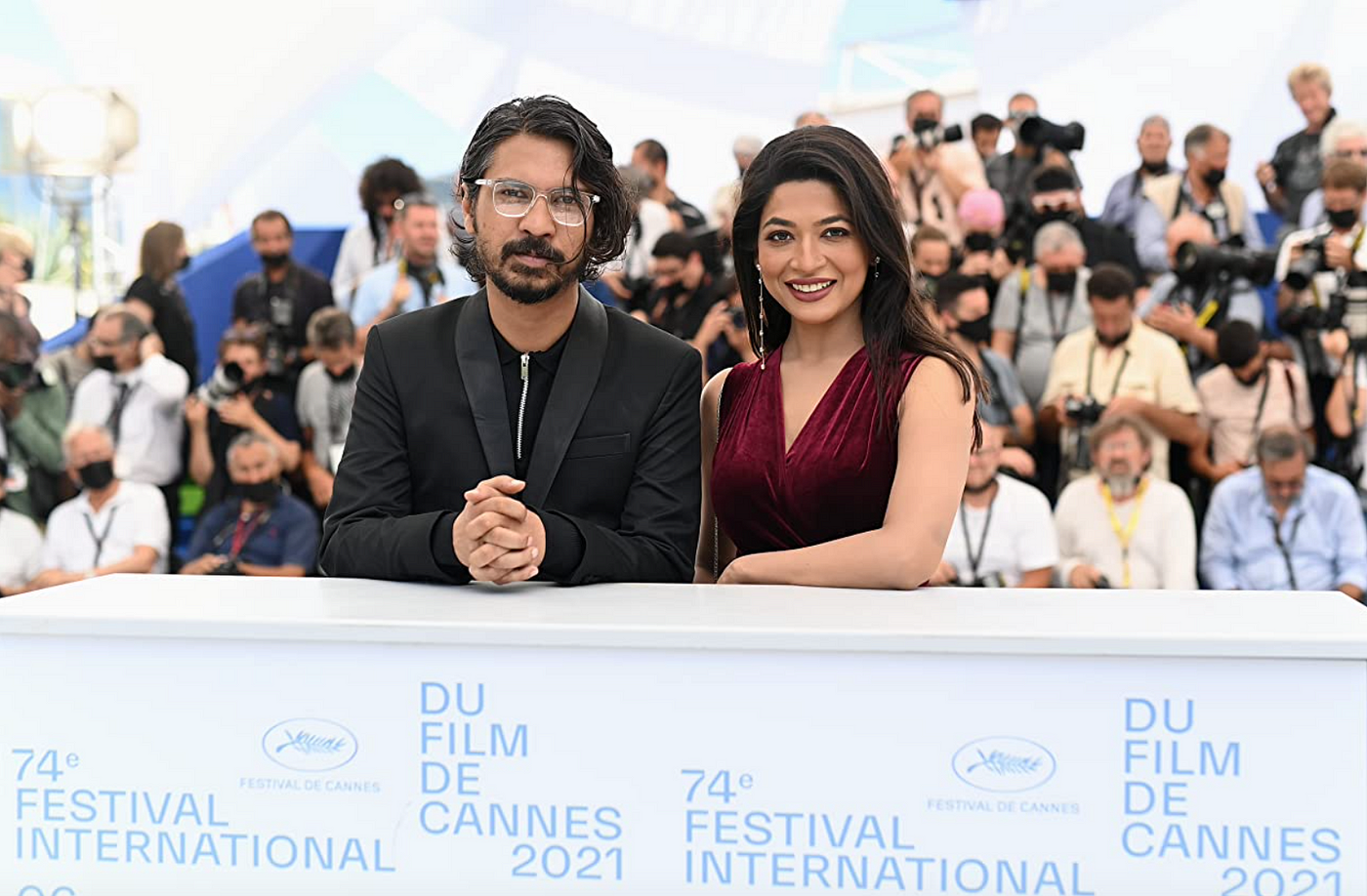
‘Rehana’s Lead Actress Azmeri Haque Badhon and Director, Abdullah Mohammad Saad in Cannes

Watch the trailer here: https://www.imdb.com/video/vi2649277209?playlistId=tt14775748&ref_=tt_ov_vi

The title refers to a woman (brilliantly played by Azmeri Haque Badhon) who is most often seen in closeup in the icy blue, antiseptic and claustrophic setting of the medical college in which she teaches. Rehana is a serious woman, juggling her job as a teacher, doctor, single mother, sister and daughter. Her own daughter Emu is a free-spirited six year being raised in the household of her mother and father and occasionally by her brother and sister and her sister’s husband. She leads a life filled with many responsibilities to keep the family afloat and functioning.

The question this film poses is whether this is a feminist film or a film, made by an “equalist”, which in the end caves into the societal norms of inequality and perpetuates the unjust treatment of females.

There is a most interesting scene about three-quarters of the way into the film, perhaps the only one without Rehana taking center stage, where Rehana’s sister and brother-in-law have a discussion in which the husband calls the wife a “pseudo-feminst” and the wife calls the hysband a “pseudo-liberal”. This is probably the essence of the complex relationship between the sexes. Seeing the relationship between the man and wife as they have their conversation is capped by the husband’s summary of everyone in the end being guilty of splitting from each other and slitting one another’s throats.

We first encounter Rehana from behind as she walks through sterile halls of the medical college where she works, and we find her again as she supervises an exam from which she expels a female student for cheating. When another speaks up on her behalf, Rehana asks her name and tells her to be quiet or she too will be expelled from the room. This is our introduction to Annie, the second character around whom this drama turns.

As Rehana walks to her office, she hears a cry come from the office of her colleague-boss’s office and stops to hear more. She then sees Annie again, this time crying as she exits the boss’s office with her shirt’s button torn off. Rehana takes it upon herself to confront the issue of sexual impropriety which she has just witnessed to the shame of Annie, physically sick to the point of nausea at what has occurred.

At the same time that all of this is going on, Rehana is struggling to make sure her irresponsible brother picks up her daughter from school. Later her daughter’s school calls to report her daughter has bitten a classmate. Before punishing her daughter and making her apologize, she listens as her daughter’s tells her she bit the boy because he is always pinching her.
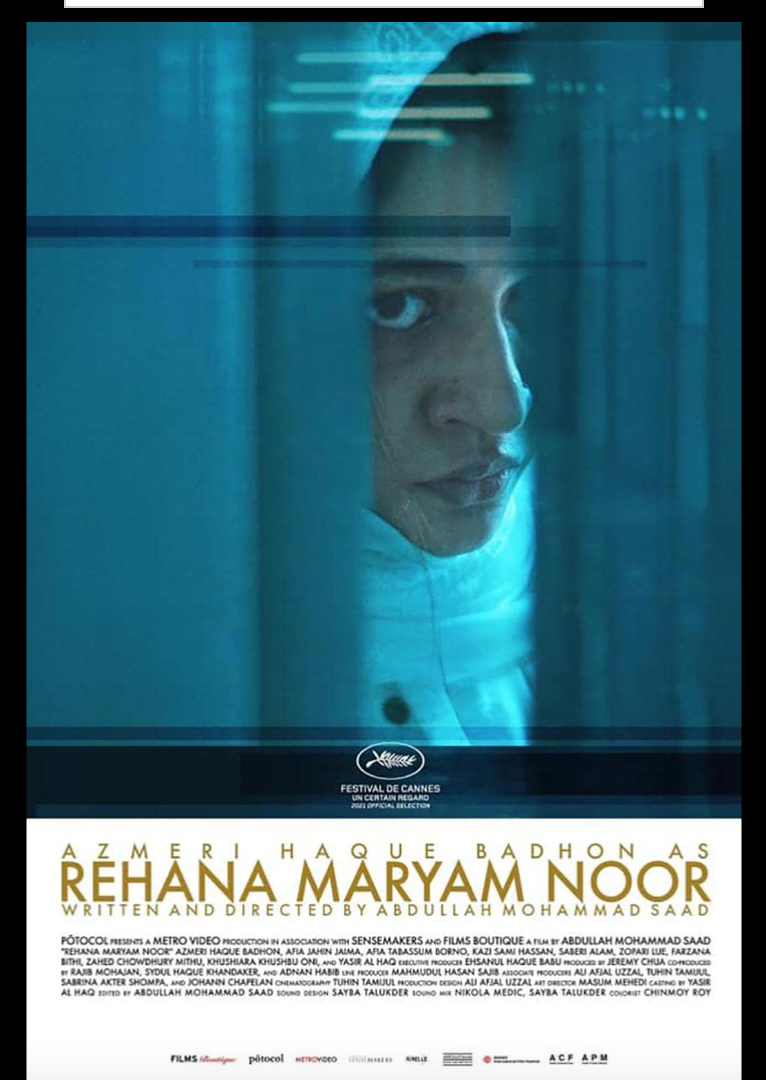
Faced with two injustices, both related to male privilege, Rehana proceeds to seek justice. She is not only alone in her introverted sense of right and wrong, she is alone because of Annie’s fears of ruining her reputation and facing societal punishment, of putting her family to shame, and failing at the school which costs her family so much sacrifice. Rehana’s lonely quest for justice becomes an obsession. She tells Annie that she will report the incident as happening to herself. And in turn, Annie betrays Rehana and Rehana realizes that perhaps Annie has been seeing the professor at other times as well. The female administrator of the school also is hesitant to make a report which will soil the school’s reputation and lists her reasons, all relating to male privilege and mistrust of female initiatives. Rehana becomes a singular target as she confronts the deeply embedded forces of patriarchy in Bangladeshi society.

As a counterpoint to her workplace harassment issues, she is at first proud of her daughter’s striking back in self-defense. But that too has consequences. If the child does not apologize to the boy she bit, she will be expelled. She is looking forward with great excitement at performing in front of the school when Rehana decides she will not apologize and therefore will not participate in the school performance.

In the end, Rehana uses force against her own child even though she understands the position of women as victims of such violent suppression. She perpetuates the violent repression of women by forbidding her daughter to perform the piece she has worked so hard to perfect. By not explaining to her daughter the reason she was not going to perform, she forces the child to learn that power rules over justice. And it leads to future mistrust among women which disallows the solidarity needed among them to fight sexual based injustice. It leaves the child with the same problem the mother is facing. And in the end, everyone, including Rehana is lying.

Thereafter, her daughter will resent her just as the students resent her for bringing a light upon the systemic repression of female students. Life would be easier if she would just ignore it, allow her daughter to perform in a treasured role in the school play after apologizing to the student, or if she would simply allow the young woman to hide her shame within herself rather than make it public.

On the other hand, something like the slap she gives Annie for betraying the cause of justice, or the proverbial slap a mother gives her daughter in some cultures when her menstrual period begins, as if to warn them that life will be a punishment for being born female, there is a consciousness which takes over in all parties of the injustice done. The lesson she is teaching her child may be a life-saving gesture for the child growing up in that society.

I wanted to know what led the male director and producer to this decidedly female story.

Writer-Director Abdullah Mohammad Saad’s answer:

“I always start with a character rather than a subject. I believe my protagonist eventually guides me to the subject. In this case, I have been obsessing about Rehana for quite some time. She is someone with whom I could personally connect. My three brilliant elder sisters had a huge influence on me while growing up. I have seen them closely as sisters, as daughters, as professionals, and as mothers. I guess I wanted to investigate and share that experience. Also, I have always been very interested in the complex relationship between women and men, and how we treat each other. Perhaps, all of these culminated into Rehana Maryam Noor.

Even though [establishing an equal status for women] has been real slow, but I think the scenario is changing. I am not a very optimistic person but I can see that the deep rooted distrust, fear and anxiety between men and women are getting narrower. Perhaps the greatest revolution of the human history would be to make everyone understand that we are all the same and we have to depend on each other and help each other to survive in this complex world, not the other way around.”

National award-winning critic and curator to festivals worldwide, journalist and the India and South Asia Delegate to the Berlin International Film Festival, Meenakshi Shedde, says, “Can’t wait for sub-continental audiences to see this film. Take a bow, Bangladesh!”

She also says,

“[Saad’s] screenplay is in the same class as Asghar Farhadi’s finest work, in terms of moral complexity. Also, it is rare and thrilling to see such powerful images of strong, financially independent Muslim women in South Asian feature films, especially single mothers; all the more daring for coming from a secular nation with Islam as its state religion.

Indian subcontinental cinema has a long history of male directors being ‘equalists,’ if not feminists. Saad delivers a masterstroke: [Rehana]’s protagonist is not the victim of rape, but a witness, thereby indicting all of us who may be witnesses or aware of rape, but unlike [Rehana], refuse to go all the way till justice is served. More importantly, creating sympathy for the victim or witness is a low-hanging fruit that doesn’t interest Saad. If anything, he goes out of his way to make it challenging for the audience to empathise with his protagonist, even though she is obviously fighting for the right thing. In doing so, Saad raises the bar incredibly high: [Rehana] is not only a fantastic film, it is also a demanding film, yet deeply rewarding, leaving you with a welter of morally complex positions on rape and consent. It is also painful to watch reality reflected: how swiftly women who call out rapists are punished, and in a perverse subcontinental specialisation, how manipulative men swiftly turn the tables, portraying the victims of rape as perpetrators of injustice against men. [Rehana] nearly destroys herself, as well as those around her, in her quest for justice.

As Variety says,

“While the film raises questions of truth and the difficulty of establishing it — especially within the entrenched system of an institution — Rehana herself comes under the moral microscope in terms of her conflicted relations with her students and with Emu. The chain of scenes in which this loving and committed mother engages with her lively, intelligent child (a sparky, winning and eventually troubling performance by young Afia Jahin Jaima) culminates in a closing moment that shows how the cycle of rage perpetuates itself, even when fuelled by noble social convictions.

Indeed, three top Bangladeshi directors have recently addressed #MeToo — Saad, Mostofa Sarwar Farooki’s web series Ladies & Gentlemen that dropped on Zee5 Global on July 9, and Rubaiyat Hossain’s Made in Bangladesh. One could consider them part of a Bangladeshi New Wave, along with several other directors. “

This searing investigation of a woman determined to seek justice raised more questions in my own mind about how and why the writer-director Saad came to filmmaking.

How did you learn to make movies?

I didn’t have formal training. I learned by watching films and reading about them. I also worked as a TV commercial director before I made my first film. It helped me to learn the technical side of filmmaking. I think his journey might encourage upcoming filmmakers in their own journeys.

Did you make many shorts before making a feature?

Yes, I made a couple of short films with my friends.

What brought you into making movies?

It’s hard to explain. I don’t think there was a single reason or incident. I didn’t grow up with movies. Watching films in theatre was not a common practice in my family. I tried to do a lot of other things in my life where I failed. I guess filmmaking grew into me slowly and eventually gave me a sense of purpose.

How did the Singapore Film Festival and meeting Jeremy Chua there change your life?

I will always be grateful to the Singapore Film Festival, especially to Zhang Wenjie. He was the program director of the festival at that time who selected Live from Dhaka. He inspired me a lot.

I met Jeremy [Chua] in the Singapore festival. He also had a film in the competition. We talked a little bit and found some similarities in our approach to screenwriting. After the festival, we began discussing a lot and decided to work together. He is very talented and passionate.

— -

Saad’s debut feature Live from Dhaka won best director and best actor at the Singapore International Film Festival in 2016, and went on to screen at other festivals including Rotterdam and Locarno.

Rehana was produced by Jeremy Chua of Singapore’s Potocol, in association with Bangladesh’s Metro Video. The project was made with the support of the Doha Film Institute Post Production Grant 2020 and the Busan Asian Cinema Fund. It is co-produced by Sensemakers (Bangladesh) and associate produced by Girelle Production (France). Rajib Mohajan, Saydul Khandaker Shabuj and Adnan Habib serve as co-producers, Ehsanul Haque Babu as executive producer and Johann Chapelan as associate producer.

I also wanted to know more about the producer Jeremy Chua and how he chose to become involved in this film. You can watch the uncut interview below.

Double-click on picture to bring up entire interview with jeremy chua and sydney levine

Below are excerpts from an interview Jeremy had previously with Variety, as quoted in text below.

https://variety.com/2021/film/festivals/jeremy-chua-cannes-rehana-film-funding-1235012288/

Jeremy Chua is a Singaporean producer/writer based in Singapore and Paris. Since 2014, when he started his own company, Potocol, a company devoted to Asian auteur films, he has co-produced A Lullaby to the Sorrowful Mystery by Lav Diaz (Silver Bear Alfred Bauer Prize, Berlinale Competition 2016), A Yellow Bird by K. Rajagopal (Cannes Critics Week 2016) and Brotherhood by Pepe Diokno (Karlovy Vary IFF 2016). Potocol is also developing Tomorrow is a Long Time by Jow Zhi Wei (Jerusalem Film Lab 2016), You Are There by Nicole Woodford (SEAFIC 2017), I See Waves by Abdullah Mohammad Saad (ACF Script Development Fund) and is in post-production for Family Events by Ying Liang. In 2017, he was selected as one of Berlinale Talents and was a finalist for the VFF Talent Highlight Award. He is also a programmer at the Pingyao International Film Festival.

Variety: What attracted you to Rehana? How did you meet Saad?

I think even in Asia, a lot of us do not have many chances to be exposed to independent or arthouse Bangladeshi films. But after I saw Saad’s first film, Live From Dhaka at the Singapore International Film Festival in 2016, I realized that there is a lot of talent in Bangladesh. The directing, the dialogues, the cinematography, the acting, the editing, the style; there is a new vision and energy that Saad and his team brought to the screen. I could tell that he understood a darker side of humanity, in both its beauty and vulnerability. Although his storytelling is minimal, his characters are layered with multiple complexities and this organically creates tension and drama. It has a similar sensibility to the kind of films I love. So it was exactly during the festival we discussed and decided to work together to develop and produce his second film.

Sydney Levine: What kind of films do you love?

I love the sort of film about people’s mysteries that occur in life. Today it is easy to get caught up in existence and life’s routines. Films can transform things one knows about but not really is aware of. How bleak reality pushes people to the edge of humanity, to extreme measures. In Singapore the intellectual concept o poverty exists, but we don’t really know it. The film showed a Bangladesh we did not know before though workers are in Singapore but are out of sight for us. The film humanizes them and builds a world where emotional reality becomes real.

The film was done on no budget and I wanted to work on a second film with better structure, getting international partners. Initially we thought it would take place in Thailand and we researched Thailand with the Busan Fund’s money. He had a script idea but when he returned he felt the film had to be about Dhaka. It was a 180 degree turn. It was about a woman who would never back down. She is brought to the edge. It was investigative at first but he got more nterested in knowing her frailty … as a mother as well as a professional.

Sydney: Why are many of your films about women?

It is coincidental. Characters I don’t understand interest me most. In Paris, many of the people I met were women. There are parallels with the feminine world, more honesty, more related to reality — women confront it more strongly, the emotional side…

Sydney: How did you become interested in film?

As a kid I had to struggle emotionally to connect with people; I didn’t understand feelings. Watching films showed feelings, otherwise I had a very inner world. Film was like an epiphany, a touching of God. I understood through them why people behave as they do. There was an emotional communication through film related to parents and friends with problems.

Sydney: When do you choose to work on a movie?

I want to know the characters and have a better understanding of them.

Variety: How did you go about financing the film?

There is no national commissioner in Bangladesh or regional funds around South Asia. At the start, Saad introduced me to a young and upcoming producer in Dhaka, Rajib Mohajan, and together our first step was to apply for the Asian Cinema Fund for Script Development from the Busan [International Film Festival], which we were awarded in 2017. We then spent many months researching and exploring different story ideas. By 2018, we had an advanced draft of the script and applied to participate in the Asian Project Market of Busan IFF. At the market, we met many producers, sales agents and programmers who gave us invaluable feedback; and found partners from France and Norway to apply for European financing. Unfortunately those bids were unsuccessful and we began searching for private equity in Bangladesh. We received a couple of offers but finally decided to work with executive producer Ehsanul Haque, who was extremely supportive of the artistic direction and gave us a lot of freedom to create. We were also supported by members of the crew, volunteers and sponsors. After production, we applied for post- production funding and were supported by the Doha Film Institute’s Post Production Grant 2020. Finally, our French associate producer Johann Chapelan covered our final expenses for deliverables.

Variety: What did the selection in Cannes mean to you?

Any film is a sacrifice and a devotion. It takes up a lot of creative energy, time, commitment, and of course money. So to me the Cannes selection in Un Certain Regard is a validation of Saad’s talent, the fire in his heart, for him to be living in a place that is extremely difficult to make independent films, especially over the last two years. It is a beautiful dream and reminds me to take nothing for granted. This can only be fuel for the next projects I’m working on.

Sydney: What would you like conveyed to the Women’s Conference of the Dhaka Film Festival?

I learned in Bangladesh that there was a very small percentage of women within the structures of power and I hope they will learn how to make changes. I feel the film may empower different aspect of social life. Women should not be defined by the structures that are hurtful, even if it is just impacting another person; to look away or not look away is an important decision. I hope it will allow women to take charge more. Even my own crews are mostly women; there are very few women. I hope younger people will mix

Production companies

· Doha Film Institute (support) — Qatar

· Girelle Production — France

· Metro Video — Bangladesh

· Sensemakers — Bangladesh

· Potocol — Singapore

International Sales Agent: Films Boutique

Distributors

· Grasshopper Film (2022) (USA) (all media)

· Gratitude (2022) (USA) (all media)

Festivals

France 7 July 2021 (Un Certain Regard)

Australia 17 August 2021 (Melbourne International Film Festival)

So. Korea 6 October (Busan Film Festival)

UK 10 October 2021 (BFI London Film Festival)

Saudi Arabia 7 December 2021 (Red Sea Film Festival)

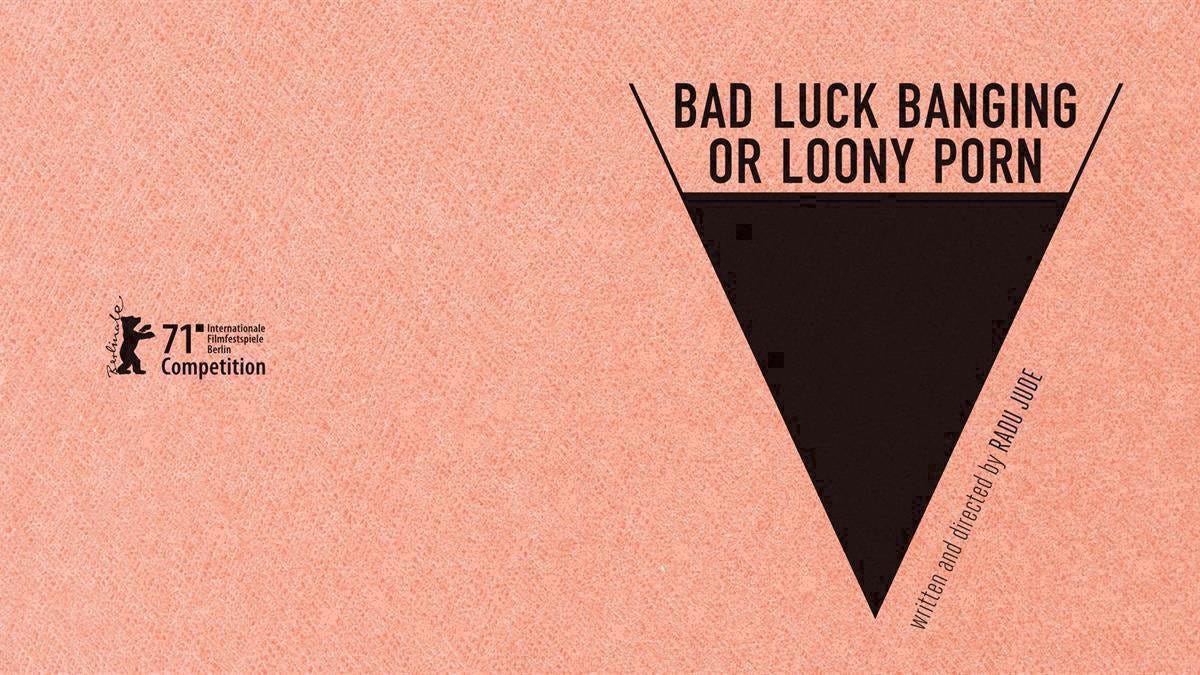
Romania’s Oscar© 2022 Entry for Best International Feature: ‘Bad Luck Banging or Loony Porn’ by Radu Jude


Hilarious gallows humor shows the warped and cutting sense of humor and perception of humanity of Radu Jude!

Done on a shoestring budget during the time of COVID, footage often seems like a potpouri of scraps and vignettes taken as our protagonist walks through the city of Bucharest, though always with a focus on Emi, an otherwise drab schoolteacher as she goes through a day of planning how to counter the accusations which will come her way at the evening’s parents meeting.

Sound design is especially well done with the city sounds, snatches of conversation overheard and that idiot who keeps laughing and commenting throughout the parents’ meeting. It alone captures the unpleasant and yet oddly attractive atmosphere of Bucharest. Hats off to Hrvoje Radnic for sound on set, Dana Bunescu for sound design and Michel Schillings for sound mix.

Our protagonist Emi’s career and reputation are under threat after a personal sex tape is leaked on the Internet. Forced to meet the parents who are demanding her dismissal, Emi refuses to surrender to their pressure.

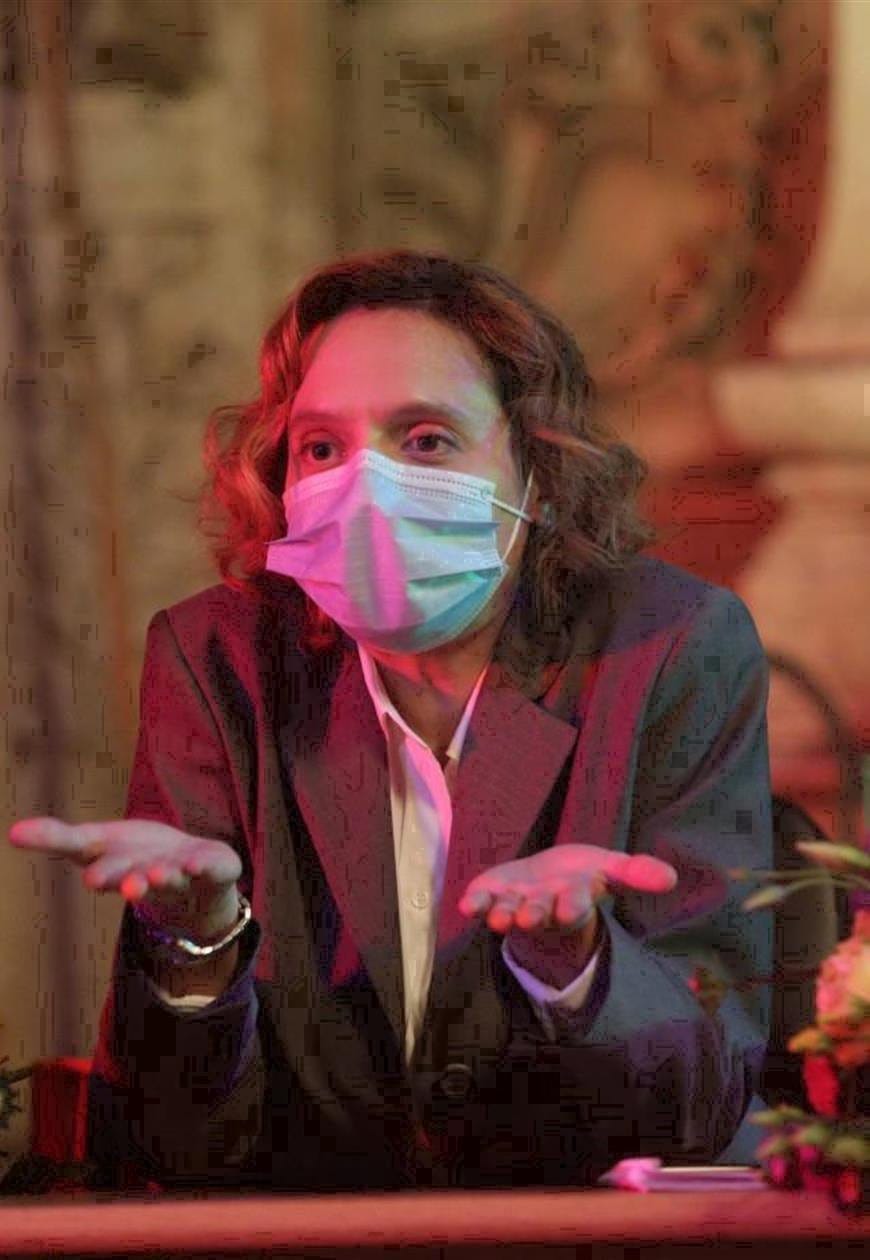
Emi played by Katia Pascariu

Radu Jude (Aferim!) delivers an incendiary mix of unconventional form, irreverent humor and scathing commentary on hypocrisy and prejudice in our societies. The forces of censure and the fascist nature of the public mob’s opinion at their root want to ban every pleasure including those which we might enjoy in our most private lives in the name of their narrowly defined “propriety”.

International distribution deals (ISA: Heretic) spiked after the film won the Golden Bear for Best Film at the 2021 Berlin International Film Festival, but producer Ada Solomon expressed concern that a U.S. deal could prove tricky as the movie contains several scenes of hard-core sex. She said in an interview that the film’s depictions of sex should be seen in context, especially given the often lax attitudes towards on-screen violence in U.S. movies. “It’s happening more and more that violence is accepted [but] nudity is not,” she said. “For me, violence affects me emotionally much more than nudity. I’m not saying we should censor this as well; we should consider [the sexual content], not through an algorithm. Things should be considered in their complexity — there is no complete black and complete white.”

The film was picked up for U.S. by the ever-brave Magnolia who will release theatrically in November.

The film was banned from public screening in Russia due to its “promotion of pornography”. However it did screen in the Moscow International Film Festival.

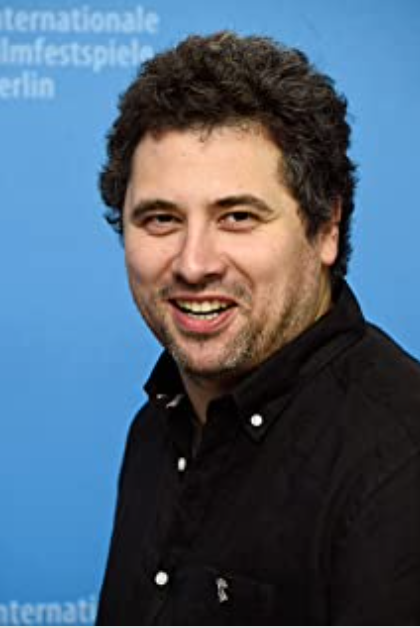
Radu Jude

Radu Jude on ‘Bad Luck Banging or Loony Porn’:

Origins

The film first appeared out of long discussions with friends. On a few occasions we discussed real-life stories from Romania and other countries, of teachers being expelled from schools where they were teaching because of what they were doing in their private lives: live-cam sex chat or posting amateur porn recordings on the internet. The discussions were so heated, it made me think that although the topic seems trivial and shallow, there must be a lot more behind it if reactions to it are so powerful. Then I decided to make a film — so now I have the last word in front of my friends, they cannot come up with something like that.

The film has three parts which engage each other in poetic ways — understanding “poetic” according to Malraux’s definition: “Without doubt all true poetry is irrational in that it substitutes, for the ‘established’ relation of things, a new system of relations.”

While the film title is mostly self-explanatory, its subtitle, ‘a sketch for a popular film’, could benefit from an explanation. Malraux once noted that “Delacroix, though affirming the superiority of the finished painting over the sketch, kept many of his sketches, whose quality as works of art he considered equal to that of his best paintings.” The idea struck me as relevant and I decided to apply it in filmmaking and try to see what a film would look like if its form was left open, unfinished, like a sketch. And yes, “popular”, since I believe the film could be easy like a summer breeze and because of its tabloid-like topic. But it is not a real popular film. Only a sketch of a possible one.

Shooting in COVID Times

The first lockdown ended in Romania at the end of May and we were supposed to film in October and November. When we saw that the second wave of Covid-19 was coming (at the beginning of July), me and the producer Ada Solomon had to decide: either we stick to the plan (which meant also applying for extra funding), with the risk of postponing the shooting in case the crisis worsens, or we film sooner with the money we have. We opted for the latter and started to prepare the film. The number of cases was rising, so I had also to decide how to interact with people. I strongly believe that, as a director, you have a certain responsibility towards the cast and crew.

When I was young, I really admired all the crazy shoots I read about: Way Down East, Aguirre, Apocalypse Now etc. I still admire them, but I am too weak: I try not to risk the life or health of anybody when it comes to shooting. I don’t think any film in the world is worth someone contracting even a common cold, and my bad films — even less. With these in mind, I did all the casting, and all the rehearsals on Zoom and decided to have the crew wearing masks. And also, even the cast. Firstly, because the film was supposed to be contemporary and the masks were part of our daily life and I wanted to capture this moment, to find the anthropological aspect of the mask-wearing. Secondly, because I cared about the health of the people involved. You know, many of them are in the film at my invitation. I was the host and I felt responsible. Most of the people agreed with these safety regulations. Some of them, more vulnerable, agreed to do the film only because I promised them that the rules of social distancing and protection will be severely respected. We all tested for Covid-19 before shooting and two times more.

If you went down on the street during this time, the signs that remained — posters for concerts, empty restaurants, and so on and so forth — were already signs of a non-existent reality. Cinema has this possibility to capture things, to capture the signs of the time passing, to make a capsule of the moment in many ways.

In the first shooting day, Ada Solomon, our producer, explained to everyone that wearing the mask is mandatory on set for the whole film, that we must change it every 4 hours (they were provided free by the production), that we have only sandwiches as catering (for obvious reasons). Everybody (literally: everybody) agreed. And most of us respected the rules, although it was exhausting, and wearing a mask in severe heat for 12 hours a day can be horrible. Then, there were some crew or cast members sometimes not respecting the rules, which made our shoot more challenging than it could have been. I am not against people who break the rules, on the contrary, if it involves only their bodies. I am against breaking the rules when you endanger or harm others. The great thing on a film set (or on my sets, anyway) is that everyone has the same rights as everyone else: the same working hours (apart from special situations, like a more time-consuming make-up etc.), the same food, the same accommodation or transport. So, it was quite disappointing to have a few people every day taking off the mask whenever they could. I see it as a lack of respect for their colleagues, a kind of “Fuck you, I don’t care about anyone else, I want to feel good even if I can infect you.” This sometimes made the atmosphere on the set tense, but that’s it. I felt relieved when the shooting ended, and we were all healthy.

Themes

What is obscene and how do we define it? We are used to acts which are much more obscene, in a way, than small acts like the one that set off the uproar we see in the film.

This was my idea — to clash these two types of obscenity, and to see that the one so-called obscenity in the porn video is nothing compared with what is around us, but that we don’t pay attention to.

The film tells a contemporary story, a small one, a little story. If history and politics are part of the film, that is because the story itself has a deeper meaning if we see it in a historical, societal and political context.

Obscenity is the theme of this film and the viewers are constantly invited to compare the so- called obscenity of a banal amateur porn video with the obscenity around us and the obscenity we can find in recent history, whose traces are all around. So, the viewers should make this montage operation. Georges Didi Huberman wrote something very important regarding montage and it could apply to our film as well:

“Le montage sera précisément l’une des réponses fondamentales à ce problème de construction de l’historicité. Parce qu’il n’est pas orienté simplement, le montage échappe aux théologies, rend visibles les survivances, les anachronismes, les rencontres de temporalités contradictoires qui affectent chaque objet, chaque événement, chaque personne, chaque geste. Alors, l’historien renonce à raconter ‘une histoire’ mais, ce faisant, il réussit à montrer que l’histoire ne va pas sans toutes les compléxités du temps, toutes les strates de l’archéologie, tous les pointillés du destin.” *

* “Montage will be precisely one of the fundamental responses to this problem of constructing historicity. Because it is not oriented towards simplicity, Montage escapes theologies, and has the power to make visible the legacies, anachronisms, contradictory intersections of temporalities that affect each object, each event, each person, each movement. Thus, the historian renounces telling ‘a story’, but in doing so, succeeds in showing that history cannot be, without all of the complexities of time, all the archaeological strata, all of the perforated fragments of destiny.”

ABOUT THE FILMMAKER

Radu Jude is a Romanian director and screenwriter. He studied filmmaking in Bucharest and started his career as an assistant director. In 2006, he made the short film The Tube with a Hat, winner of more than 50 international awards. Jude’s feature debut The Happiest Girl in the World (2009) was selected for more than 50 international film festivals. Titles such as Aferim!, Scarred Hearts and Everybody in Our Family followed and won multiple awards: Silver Bear for Best Director in Berlinale 2015, Special Jury Prize in Locarno 2016 and an EFA nomination for Best Scriptwriter. The international premiere of The Dead Nation in Locarno 2017 marked his debut in documentary film. “I Do Not Care If We Go Down in History as Barbarians” (2018) won the Crystal Globe for Best Film and Label Europa Cinema Prize in Karlovy Vary in 2018. His latest films, Uppercase Print and The Exit of the Trains (co-directed with Adrian Cioflâncă), premiered in Berlinale Forum 2020.

The Exit of the Trains was a long, non-narrated documentary on the horrendous treatment of the Jews in Romania at the hands of the Romanians under the various dictators of its recent past, from the Germans to the Russians and the pograms before.

Cast | Katia Pascariu (Emi), Claudia Ieremia (The Headmistress), Olimpia Mălai (Mrs. Lucia), Nicodim Ungureanu (Lt. Gheorghescu), Alexandru Potocean (Marius Buzdrugovici), Andi Vasluianu (Mr. Otopeanu) Produced by | microFILM Romania

Co-produced by | Paul Thiltges Distributions (Luxembourg), endorfilm (Czech Republic), Kinorama (Croatia)
In association with | Bord Cadre Films (Switzerland), Sovereign Films (UK)

Producers | Ada Solomon

Co-producers | Paul Thiltges, Adrien Chef, Jiří Konečný, Ankica Jurić Tilić Associate Producers | Dan Wechsler, Jamal Zeinal-Zade, Andreas Roald Countries of production | Romania, Luxembourg, Czech Republic, Croatia Cinematography | Marius Panduru, RSC

Editing | Cătălin Cristuțiu
Production design | Cristian Niculescu
Costumes | Cireșica Cuciuc
Make-up | Bianca Boeroiu
Music | Jura Ferina, Pavao Miholjević
Assistant director | Isabela von Tent
Sound | Hrvoje Radnic (sound on set), Dana Bunescu (sound design)

Sound mix | Michel Schillings
Line producer |Valentino Rudolf
VFX | Raoul Nadalet, Espera Production

Comedy — Completed 2021

Berlinale — Berlin IFF 2021 Competition Winner of Golden Bear for Best Film, San Sebastian FF 2021, Busan IFF 202

International sales agent Heretic licensed rights to Argentina’s Zeta, Australia’s Potential, Austria’s Panda Lichspiele, Benelux’s September, Brazil’s Imovision, Germany’s Neue Visionen, Greece’s Cinobo, Iceland’s Bio Paradis, Israel’s Lev/ Shani, Japan’s Twin, Norway’s AS Fidalgo, Poland’s New Horizons, Portugal’s Films4You, Romania’s Micro Multilateral, Serbia’s MCF Megacom, Sweden’s Njutafilms, Switzerland’s Xenix, Taiwan’s Swallow Wings, U.K.’s Sovereign, U.S.’s Magnolia

Radu Jude is a Romanian film director and screenwriter. In 2003, he graduated from the Media University of Bucharest (Film Directing Department). Jude worked as an assistant director on Amen. (2002), directed by Costa-Gavras, and The Death of Mr. Lazarescu(2005), directed by Cristi Puiu. He directed several award-winning short films, among them The Tube with a Hat (2006) — the most successful Romanian short film ever, winner of Grand prizes at Sundance, San Francisco, Los Angeles, Grimstad, Hamburg, Bilbao, Huesca, Trieste, Montpellier, Cottbus, Aspen, IndieLisboa, Brussels, Mediawave, Kraków, Almería, Valencia, Uppsala and many more. Other shorts were selected by top festivals, including Clermont-Ferrand, San Francisco, Cottbus and Oberhausen, where Radu Jude won the Grand Prix. Jude directed over 100 advertising commercials. The Happiest Girl in the World (2009), his feature film debut, won the CICAE Prize at the Berlin International Film Festival, the FIRESCI Prize at the Sofia International Film Festival, the Prize for Best Screenplay at the Bucharest International Film Festival and the FIPRESCI Prize at IndieLisboa. The film was selected in the ACID Programme at 2009 Cannes Film Festival. Everybody in Our Family (2012) received the ‘Heart of Sarajevo’ Award and the Bayard d’Or in Namur, among other awards. Radu Jude’s acclaimed historical drama Aferim!(2015) premiered at the 65th Berlin International Film Festival where he won the Silver Bear award as ‘Best Director’.

- IMDb Mini Biography By: Cristian Avram

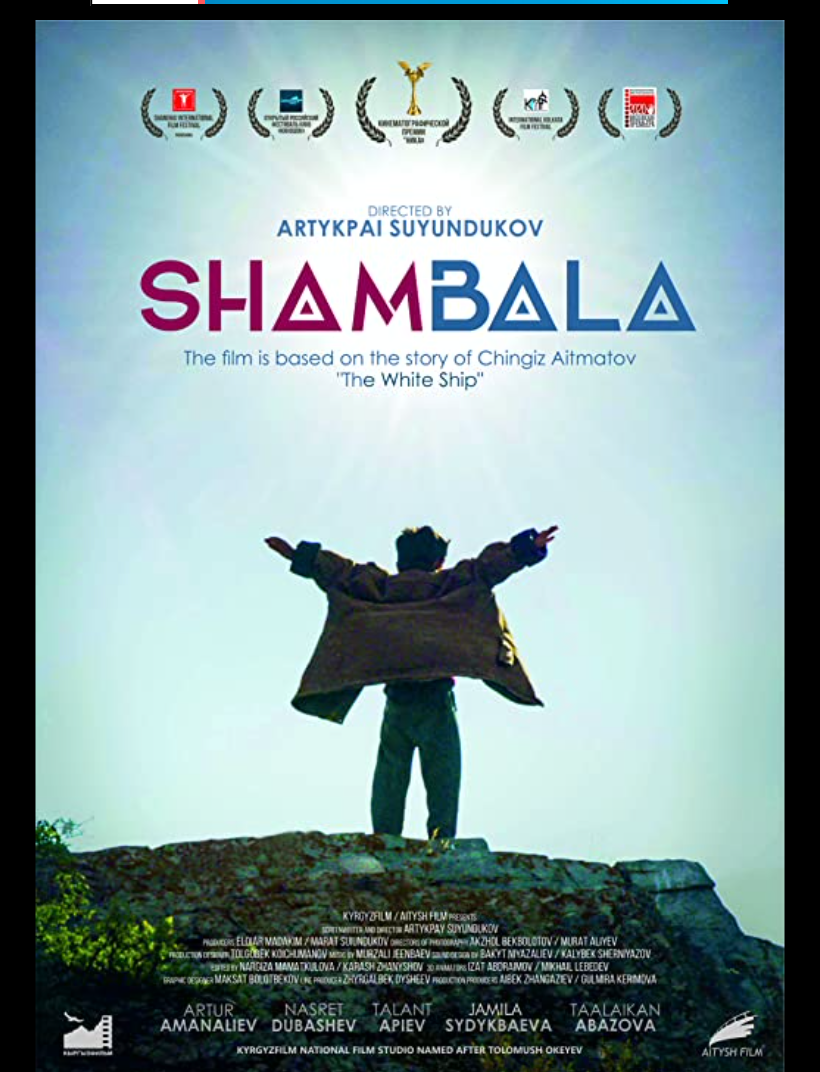
Kyrgyzstan’s Oscar© 2022 Entry for Best International Feature: ‘Shambala’ Written & Directed by Artykpai Suyundukov


Shambala, the apotheosis of a little boy who reaches the highest point in the development of belief as taught to him by his grandfather.

Based on the novella The White Ship, by Kyrgyz writer Chingiz Aitmatov, Shambala tells the story of a lonely, impressionable, seven-year-old boy who lives in a protected forest, high in the mountains, with his grandfather, step-grandmother, aunt and uncle. He spends his time exploring and listening to legends from his grandfather, in particular tales about the sacred Mother Deer. He witnesses the myths and folklore as they conflict with the harsh reality of the world around him.

The beauty of Kyrgyzstan and its ancient beliefs is told in a spectacular style and the seven year old actor carries the story.

World Premiere Shanghai Interational Film Festival 2020. Its US Premiere is taking place at the Asian World Film Festival in Los Angeles at the Landmark Theater on Pico, November 1–11.

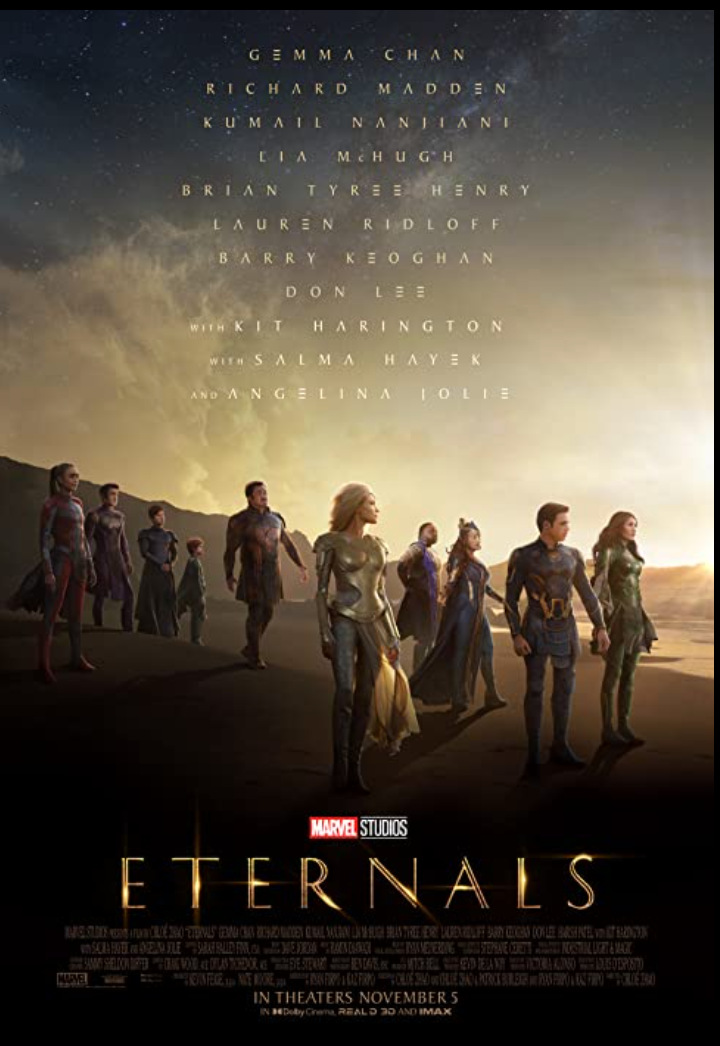
AWFF 2021 Opening Night is Chloé Zhao’s Eternals starring Salma Hayek, Angelina Jolie, Richard Madden, Gemma Chan, Ma Dong-seok, Brian Tyree Henry, Kit Harington, Kumail Nanjiani, Lauren Ridloff, Barry Keoghan, and Lia McHugh.

International sales by production company Aitysh Film.

Wednesday, October 10, 2012

Jewish Heritage Travel: Lack of Funding Closes Museum Housing Sarajevo Haggadah

Jewish Heritage Travel: Lack of Funding Closes Museum Housing Sarajevo Haggadah
When culture is cut in one area, it will soon affect others.  In this case, the "other" is the Sarajevo Film Festival and its Talent Campus; both symbols of the brave fight and spiritual resistance put up by the Bosnians in the face of the Serbian siege and bombardments which took place from 1992 to 1997 (?) or thereabouts.  The spiritual resistance which surpassed the armed warfare was fed by the deeply rooted multi-cultural environment that made Sarajevo able to survive.  No culture...no future.  Save Sarajevo!

Monday, June 7, 2010

You Can Find Me At IndieWIRE

I am thrilled that SydneysBuzz has found a home with IndieWIRE

.

Since Cannes, I have been blogging on IndieWIRE and have had such a great experience sharing and talking with colleagues Eugene Hernandez, Brian Brooks, Eric Kohn, my favorite L.A. friends Anne Thompson and Todd McCarthy. I am so honored to find myself installed in that legendary land of New York indies, a place I’ve always admired. My position here is so unique with no one specifically telling me what to write, or how to spend my working hours. I am free to follow my instinct. And I think the instinct has become engrained in me to follow the trends and developments of the international marketplace.

So come over to www.SydneysBuzz.com and see my blog on IndieWIRE

.

Wednesday, May 5, 2010

Los Angeles' Favorite Italian

Eleonora Granata-Jenkinson, Los Angeles' film community's favorite Italian, long known and respected for her extensive and impressive knowledge of the film market in the US and abroad has been named by the Italian company FilmMaster to direct their new Los Angeles office. Americans met Eleonora Granata first when she handled acquisitions at RAI and later as Sr. VP of Production at Pandora Cinema. In L.A. she was VP of Acquisitions at Turner Pictures, later the Venice Biennale's Los Angeles representative. She has continued consulting in acquisitions and programming, and the entire film business commnunity in L.A. congratulates her on this move.

FilmMaster, one of the world’s most prestigious production companies and the top production company in Italy, will be more available to its American clientele who have increasingly turned to FilmMaster in recent years for production services in Italy.

FilmMaster’s CEO Ada Bonvini explained: “In recent years, we have become increasingly aware of the importance of establishing a base in Los Angeles. Both to meet the needs of our Italian clientele who are looking for American talent, and also to satisfy the major studios’ requirements for Italian production services. We heard terrific things about Eleonora and, as soon as we met her, we realized she was the right person to represent us.”

Since 1976, FilmMaster has been the leader in commercial production for the Italian market. They have produced over 3500 commercials, including some of the most memorable campaigns of the last decade. Since its inception, FilmMaster has won hundreds of awards, including a total of 27 Lion Awards at the International Advertising Festival in Cannes. No other Italian production company can boast such a record.

FilmMaster’s success derives not only from its unquestionable excellence in producing, but also from its collaboration with many of the world’s most outstanding filmmakers. To cite only a few names, they have worked with legends like Federico Fellini, David Lynch, and Spike Lee, as well as directors Michael Haussman, Sam Bayer, Daniele Luchetti, Ferzan Ozpetek, Sergio Castellito and Chris Cunningham.

In 2009 FilmMaster entered into a partnership agreement with Cinecittà Entertainment, a collaboration that provides FilmMaster with considerable advantages for foreign production, as well as significant tax relief.

FilmMaster is part of FilmMaster Group, along with K-events, FilmMaster Television and FilmMaster Events Dubai.

Eleonora Granata Jenkinson
3227 Elvido Drive, Los Angeles 90049
Telephone : + 1 ( 310) 440 4030

Skype: eleonora.granata1

Saturday, May 1, 2010

One Way to Help DIYers

Hi, Peter Belsito here, guest blogging today.

Anyone who knows me and has listened to me mouthing off about 'our film world' knows that I have a one world view of filmmaking and the business.

That is to say I believe the US business (mainly LA and then NYC also) is tied inextricably to the indie world, to festivals, to the burgeoning DIY movement (and the companies and people affiliated with same) here in the US ... AND to all aspects of same on the international film scene. Simple, one world, one cinema.

The relentless march of technology (for now 'digital') drags us all along in its wake.

So ... what's new? What should we be paying attention to? What's it all mean?

Distribber.com and its founder Adam Chapnick provide a very good example of what's new and good...brought to us by the amazing Ted Hope on his excellent Blog had the below from Adam about distribber.com and the work they're doing, the opportunities they are offering our film community.

I cannot improve on what's below so I reprint it here in full.

http://hopeforfilm.com/ April 20 at 7:36am


Filmmakers vs. Aggregators: Distribber speaks of Win, Win!

Distribber was recently acquired by IndieGoGo, and in the wake of the publicity surrounding the announcement, we received a tremendous outpouring of enthusiasm and interest in Distribber’s service. As is inevitable, there’s been some confusion around what Distribber does and doesn’t do.

Distribber was created to help rights holders maximize the payback from their work and investment.

More specifically, Distribber was conceived as a solution to several persistent complaints from filmmakers and other creative rights holders about distributors in general and aggregators in particular. (“Aggregator” is the term used for a company that acts as a gatekeeper between a rights holder and a retail platform, such as iTunes, Netflix, Hulu or Cable VOD operators like Comcast, Time Warner, etc.)

The complaints surrounded 3 specific pain points:

Complaint #1. Eternal revenue-share for finite service

Aggregators (other than Distribber) work on a revenue-share basis, meaning that they make money by keeping between 15% and 50% of your revenue that they collect from the retail platforms on your behalf. They take this portion of revenue for the entire term of your deal with them. The complaint from filmmakers was that while aggregators take this money “forever,” they didn’t seem to be working forever. To many, it seemed that aggregators placed their film on the platforms and then moved on.

This situation was even more frustrating for larger rights holders — production companies, sales reps, etc. — who controlled the rights to several (often dozens) of titles, and who engaged in significant marketing and grassroots outreach but lacked access to iTunes, except through revenue share entities. The shared-revenue structure has continued to frustrate these larger companies as they have been the core demand-drivers.

Now, in defense of aggregators, encoding a film, ushering it through Quality Control “QC” and having the access to place it on iTunes or Netflix or Hulu or Cable VOD or anywhere else is indeed a valuable service — and often a time-consuming one.

However, it seemed that one could put a fair price on that service that accounted for the work and value of relationships, and offer it to filmmakers cleanly, without the burden of a revenue-share. This would enable a filmmaker, production company or other rights holder to know their cash outflow in advance, and enjoy 100% of the benefit of their film’s success. So, Distribber adopted a flat-fee-for-service model.

Complaint #2. Large deducted expenses, often including fees for marketing services that seemed unhelpful or nonexistent

Filmmakers complained that distributors and aggregators deducted expenses that seemed unreasonable, like $1500 for encoding, or an array of costs for marketing services that the filmmaker wasn’t sure had actually been done.

Here, the opportunity was again to charge a fair price, once. So, Distribber adopted a fair price. The $1295 one-time fee for iTunes placement was less than some rev-share companies charged for the encoding alone, and after only 185 sales at $9.99 on iTunes, rights holders have been entirely in profit.

Without putting too fine a point on it, it bears emphasizing: after 185 iTunes sales at $9.99, a rights holder is in profit for the rest of the film’s life on iTunes. Going forward, Distribber charges $79 per year for account access, collection and sales stats.

The best evidence that we were on the right track came when the Age of Stupid production team chose to use Distribber — they have been incredibly successful trailblazers in the hybrid distribution movement, and their endorsement told us that our service is providing its intended benefits for its ideal users.

To compare Distribber’s model with revenue-share models, consider the illustration below. At 1000 iTunes sales (retail price $9.99), rights holders give up 174% more money under a 15% rev-share than they pay to Distribber ($3,550 compared to $1295). Under a 25% rev-share, rights holders pay 228% more ($4,250). At 10,000 sales, Distribber’s one-time fee doesn’t change, but a 15% rev-share deal now costs ten times the Distribber fee ($13,000), while a 25% rev-share deal costs over fifteen times more ($20,000). Obviously, at 20,000 sales, the disparity only increases.

Looking at revenue, with Distribber’s flat fee, at 1000 iTunes sales, rights holders are paid 65% more than they would be with a 15% rev-share deal ($5,705 vs. $3,450), and they’re paid more than twice what they’d get from a 25% deal ($5,626 vs. $2,750). At 10,000 sales, Distribber clients keep $11,705 more than they would under a 15% rev-share, and $18,705 more than they would under a 25% rev-share. And again, at 20,000 sales, a rights holder does even better.

What A Filmmaker Is Charged, With:  What A Filmmaker Keeps, With:


Distribber

15% Rev-Share

25% Rev-Share

Distribber

15% Rev-Share

25% Rev-Share

At 1000 iTunes sales

-$1,295

-$3,550

-$4,250

$5,705

$3,450

$2,750

At 10000 iTunes sales

-$1,295

-$13,000

-$20,000

$68,705

$57,000

$50,000

At 20000 iTunes sales

-$1,295

-$23,500

-$37,500

$138,705

$116,500

$102,500


(The chart assumes Rev-share companies deduct from filmmaker’s revenue $2500 for encoding and/or marketing.)


And now, with Distribber’s addition of Amazon VOD and Netflix’s streaming service, we decided that as a limited-time promotion, for the same $1295, Distribber clients could have our Amazon and Netflix service for free. This of course only makes the above comparison even more lopsided in Distribber clients’ favor, since it adds revenue without adding any expense.


Complaint #3. Late payments, and sometimes no payment

Filmmakers complained that even after resigning themselves to a rev-share deal, and agreeing to the small payout left after expenses and revenue share deductions, they had to chase distributors and aggregators for reports and checks, and sometimes with none being sent at all.


So, Distribber has decided to do away with reports and checks, and instead employ a user account system, whereby clients login with a username and password. Here they gain access to collection stats by platform, and see their collected funds balance. Clients withdraw their own money on demand, with the click of a button. Having all sales stats and collection in one account removed a major, time-consuming headache from our clients lives for $79 a year.


Next: More Pain, More Answers


Even a casual follower of the distribution business knows that there are plenty of areas it can be improved, and in plenty of ways. Distribber is continuing to actively developing new methods and models to serve rights holders across a variety of platforms, from internet to cable to mobile.


With the proliferation of tools like Wordpress, Facebook, Twitter and all the plugins and apps that support those services, it’s more possible than ever for innovative companies, teams — or even individuals — to disrupt old marketing models and connect with audiences. Filmmaker/marketers like Gary Hustwit, Lance Weiler, Tiffany Shlain and others have shown the way to create demand via their own efforts and investment. Peter Broderick is shepherding rights holders through a hybrid strategy that teaches careful allocation of specific rights to companies that are highly specialized, with the goal of maximizing the revenue a filmmaker keeps.


The key thing to understand about Distribber is that it’s a powerful tool to help enterprising rights holders keep the most of their own money. The more skilled you are at connecting with audience, the more buzz that you’ve built, the better Distribber’s deal works for you.


ADAM CHAPNICK is CEO of Distribber.com, an IndieGoGo company that places film and TV content on digital sales platforms such as iTunes, Netflix and Amazon for a flat fee while allowing filmmakers to keep 100% of their revenue.

Adam can be reached at adam@distribber.com .

Countdown to Cannes 16 Days: The Match Factory's Uncle Boonmee Who Can Recall His Past Lives

Cannes Countdown: 16 Days: The Match Factory's
Uncle Boonmee Who Can Recall His Past Lives
aka Lung Boonmee Raluek Chat

The Match Factory is one of the most dynamic and important international sales agents. To learn how international independent coproductions of the festival type film get made, you need to know origins of The Match Factory itself. Founder Karl Baumgartner is The Maestro of International Coproduction. He has been producing since 1991 and has at least two production companies, one of which is Pandora which goes back as a German distribution company to the 1950s and which with partner Reinhard Brundig is a partner in The Match Factory.  In 1963 Baumie, as he is known to his friends, prebought Jarmisch's Down By Law which immediately put both Jarmisch and his producer Jim Stark into international play.  Beside their slate of current films, they represent the entire library of Aki Kaurismäki.

Cofounder and partner, Michael Weber is one of the originators (after Wouter Barendrecht of Fortissimo) of the idea that international sales agents do not have to stick to films from their own country but can introduce films from other lands. Where Wouter brought Asian cinema to the west, Michael brought Latin American cinema to the world when he began his career in international sales at Bavaria Films International. This was the same moment that the venerable Bavaria Film Studio was resurrecting itself and designing its vertical identity.  Before that Michael was producing for TV and even acting occasionally.

The Match Factory launched in 2006 with Madeinusa, perhaps brought over by Michael from acquaintances made while at Bavaria. The international sales agency international arthouse films by acclaimed directors and promising young talents, whose films distinguish themselves through originality and style.

The Cannes competition film Uncle Boonmee Who Can Recall His Past Lives, directed by Apichatpong Weerasethakul is the penultimate example of how a film from a perhaps underfunded country can get enough financing to be made and delivered. The director, Apichatpong Weerasethakul , has already had two films in Cannes (Tropical Malady and Blissfully Yours) which certainly helps, but is not crucial to this saga. The Illumination Films producers Simon Fields and Keith Griffiths also have long histories in the international film and festival world.  Simon left his long term tenure as head of London's govenment funded distribution company and archive to go to his long held tenure as artistic director of the Rotterdam Film Festival.  Keith has been producing art films of the best kind since the late 70s.

The cynic might say that all this is what made the film acceptable to Cannes. But in the international independent film world, acquaintance with the players can very soon lead a young inexperienced (but talented!) filmmaker along the same path. And to learn how to make international waves, it is necessary to learn who is swimming in international waters.  It is important to know how such a film got made. All filmmakers, from the James Camerons to the Gregg Arakis and Apichatpong Wwerasethakuls to the still unrecognized filmmakers of the world would, if asked, acknowledge that it takes large and small miracles along the way to actually get a film made. My first awareness of this film was through the World Cinema Fund an initiative begun in 2004 at the Berlinale which develops co-operation strategies reflecting on cultural identities. Support from WCF often motivates other investors and institutions to participate in productions. Or perhaps it was from the Hubert Bals Fund the initiative operating at the Rotterdam Film Festival just prior to Berlin which funds development and post production of films from the developing countries of the world.  Take a look at the credits of this film. Each producer or co-producer enabled funding of certain types to take place.

Uncle Boonmee Who Can Recall His Past Lives aka Lung Boonmee Raluek Chat. 
UK/ Thailand/ France/ Germany/ Spain, 114 minutes

Suffering from acute kidney failure, Uncle Boonmee has chosen to spend his final days surrounded by his loved ones in the countryside. Surprisingly, the ghost of his deceased wife appears to care for him, and his long lost son returns home in a non-human form. Contemplating the reasons for his illness, Boonmee treks through the jungle with his family to a mysterious hilltop cave -- the birthplace of his first life...

Produced by:
Simon Field, Keith Griffiths - Illumination Films/Past Lives Productions (UK)
Apichatpong Weerasethakul - Kick the Machine Films (Thailand)

Co-Produced by:
Charles de Meaux - Anna Sanders Films (France) This brings French ticket receipt monies and other French subsidy dollars.
Michael Weber - The Match Factory (Germany).  This guarantees international presales.
Hans W. Geissendoerfer - GFF Geissendoerfer Film- und Fernsehproduktion KG (Germany)
Luis Miñarro - Eddie Saeta, S.A. (Spain). This accesses Spanish or European coin.

In Association With:
ZDF/Arte (Germany) This brings production and TV money

With the Participation of:
Fonds Sud Cinema (France).  French subsidies for developing countries.
Ministère de la culture et de la communication CNC (France). Insures a portion of movie ticket receipts will go toward film production.
Ministère des Affaires Etrangères et Européennes (France)

With the Support of:
Ministry of Culture (Thailand)
World Cinema Fund (Germany)
Hubert Bals Fund, International Film Festival Rotterdam (Netherlands)

Associate Producers:
Caroleen Feeney (USA)
Josslyn Barnes & Danny Glover - Louverture Films (USA)

In Association With:
Haus der Kunst, Munich (Germany)


FACT (Foundation for Art and Creative Technology) Liverpool (UK)


Animate Projects, London (UK

Recreation

Recreation a newly launched international sales company, had a successful market debut at the 2010 Berlin Film Festival, with the Panorama Special opening film Kawasaki's Rose by Academy Award nominated director Jan Hrebejk. Part of Recreation Media, an emerging group of interlinked entertainment companies, Recreation will source its product from a number of content providers at arm’s length, and by entering into alliances with exciting filmmakers, producers and other third party rights holders, building its slate around a few key partnerships.

Recreation’s first partnership of this kind is a multi-picture deal with Menemsha Films, a leading distributor of critically acclaimed films who set a record by representing 5 Academy Award nominated pictures 5 years in a row. Kawasaki's Rose, the first title in the partnership, received 2 prizes for best film at Berlin, each awarded by independent juries for the festival’s Panorama section. In his rave review, Variety’s Derek Elley noted that “[Kawasaki’s] Rose would easily have given some bloom to this year’s Berlinale in a competition slot,” and indieWIRE called Kawasaki's Rose “the one undeniable ‘find’ of the festival”.

While offering a broad range of film, television and digital media product under one roof, Recreation will segment its slate into distinctly branded labels, each targeting clearly identified niches, audiences and formats.

Entering Cannes with Two Gates of Sleep, a much anticipated film from USA and Ludo Boeken's German drama Saviors in the Night produced by Karl Baumgartner, one of Europe's most distinguished producers of international festival films, Recreation may have more news to offer as Cannes approaches and will certainly have more news as Cannes progresses.

Keep tuned to Ariel Veneziano at Recreation.